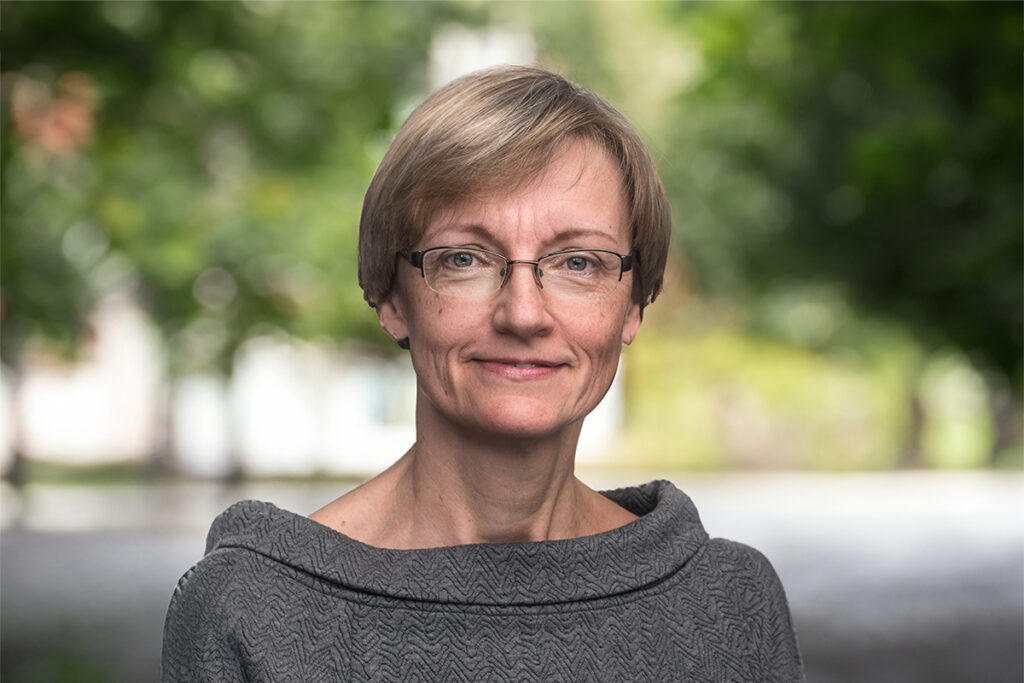
Magdalena Janus
Sunny Hill BC Leadership Chair in Child Development & Professor, Department of Pediatrics, UBC
Magdalena is a Professor at the Department of Pediatrics and the Human Early Learning Partnership at the University of British Columbia, where she holds the Sunny Hill BC Leadership Chair in Child Development.
Magdalena has an MSc from Jagiellonian University in Krakow, Poland, and a PhD from Cambridge University in the UK where she studied social relationships of young non-human primates. She completed a post-doctoral training at the Hospital for Sick Children in Toronto, working on projects involving psychosocial adjustment of young children with chronic illness in the context of attachment and the impact on sibling relationships.
Since joining the Offord Centre for Child Studies at McMaster in 1997, Magdalena, together with the late Dr. Dan Offord, developed the Early Development Instrument (EDI), a measure of children’s readiness to learn at school entry. This initiative has generated interest at national and international levels, from academic and social policy perspectives. Magdalena and her team have supported the implementation of the EDI in Canada, and its adaptation in many international sites. She has also been serving as a consultant with many international organizations, including the World Bank, WHO, UNICEF, and UNESCO on the measurement and indicators of early child development. Magdalena is a core member of the WHO-led group developing and testing in multiple countries a new development measurement tool for children aged 0-3 years and has been a scientific advisory group member for the development of the UNICEF’s Early Child Development Index 2030 (ECDI2030).
Magdalena’s research interests broadly include factors influencing children’s developmental trajectories, with more specific focus on early health predictors of later outcomes, transition to school, with a particular emphasis on children with special needs, communities’ engagement in children’s early development and health. Together with Martin Guhn and the late Clyde Hertzman, she started the Canadian Neighbourhoods and Early Child Development (CanNECD) program of research, funded by CIHR and SSHRC, that has now resulted in many graduate degrees and publications. A complementary strand on the social determinants of health for children with special health needs research has been supported by the CIHR-funded Canadian Children’s Health in Context Study (CCHICS). In her new role at UBC, Magdalena is actively expanding her mentorship activities and pursuing project addressing the developmental needs of children and youth with neurodiversities.