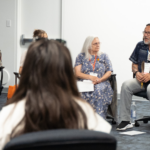
What moral skill and will do we need as citizens, professionals, parents and friends to know how to act in particular circumstances, especially when general rules and incentives are insufficient to guide us toward what is good or advantageous? Aristotle called this sort of moral know-how “practical wisdom” or phronesis. Recent research in the natural and social sciences has profound implications for practical wisdom. Findings from fields as diverse as evolutionary biology, social psychology, neuroscience, philosophy, education and political science provide an increasingly complex understanding of the human capacity (and the limits of that capacity) for empathy, judgment, problem solving, deliberation, and cooperation—all of which are ingredients of practical wisdom. The goal of the colloquium series “Between Rules and Practice” is not only to survey diverse fields of knowledge and bring them to bear on contemporary practices and institutions in democratic societies, but also to ask: Are good institutions enough? Should the university cultivate practical wisdom in citizens and leaders? For more information please contact Ann Cameron.
Wednesday, February 29, 2012
Maxwell A. Cameron, Director of the Centre for the Study of Democratic Institutions and Distinguished Scholar-in-Residence ...
Posted:Feb. 22, 2012, 11:56 a.m.
Sustainable living. The media tells us it’s the only way to guarantee the planet’s future. Governments offer us incentives to make “green” choices. Businesses are marketing “Earth-friendly” products and services with ever-greater frequency. But what does all of this mean? How can we ensure the decisions we make about what to eat and drive, or how to live and renovate our homes, are really the best ones for our planet?
Panelists include Paul Kershaw, Associate Professor at HELP, Jane Lister, Katherine White and Tracy Lydiatt.
Attend this UBC Dialogues session on Thursday, March 1st for a provocative dialogue about sustainable living. Admission is free and guests are welcome, but advance registration is required. More Information and Registration
Event Details
When: March 1, 2012, 6:30 – 9:00 pm
Where: Evergreen Cultural Centre, Studio Theatre, 1205 Pinetree Way, Coquitlam, BC
Posted:Feb. 15, 2012, 11:47 a.m.
When: March 29-30, 2012
Where: University Center, Greenville, S.C.
The Fourth Annual Greenville Family Symposium offers a forum for constructive dialogue and an opportunity to test ideas among peers, and to engage collectively in crafting policy and program responses to the most pressing issues of our time. We will look backward to see how well human services adapted to changes in social realities — what went well, what didn’t, what even made things worse, and what is still unsettled. In that context, we will also look forward and consider the ways that human service professionals and organizations can help both families and communities to enjoy greater well-being as resources ebb and flow and as ideas come and go. How can a better understanding of these large-scale trends illuminate the challenges for individual families? What can human service professionals do to facilitate positive outcomes for their clients and communities in a changing context?
Posted:Feb. 15, 2012, 8:21 a.m.
Lessons in Educational Equality
Successful Approaches to Intractable Problems Around the World
Edited by Jody Heymann and Adèle Cassola
Oxford University Press
Bringing together evidence-based recommendations and in-depth case studies of successful programs from around the world, this edited volume details effective educational equity initiatives and assesses how these models could be improved, expanded, and adapted to diverse contexts. Lessons in Educational Equality is uniquely comprehensive in its scope and its focus on how best to increase educational equality from early childhood to the tertiary level, and in contexts that span the geographic and political spectrum.
This volume offers concrete solutions to barriers based on gender, income, disability, race, ethnicity, and language. Chapters on gender address equity for female students in tertiary science and engineering programs, primary and secondary education for socially excluded girls, and equitable early childhood education for boys and girls. Socioeconomic equity is examined in chapters on promoting equal opportunities in secondary school across social class, quality primary education for the poor, and early childhood strategies for closing the achievement gap. Chapters on disability detail strategies for making inclusive education a part of the Millennium Development goals and for increasing access and achievement in tertiary education ...
Posted:Feb. 6, 2012, 2:29 p.m.
Canadian researchers are world leaders in helping parents understand how to reduce the number of diagnoses of attention deficit hyperactivity disorder, cut school dropout rates and slash the incidence of crime and drug addiction. By better understanding the dynamics of early childhood development, researchers hope to boost academic achievement and prevent children from experiencing serious problems later in life.
Speakers Adele Diamond, UBC Department of Psychiatry and Clyde Hertzman, Human Early Learning Partnership, UBC, are two of Canada’s top thinkers in the area of child development, will present their latest work and discuss what parents, families and caregivers can learn from current, cutting-edge research in this area.
This event is free and open to the public thanks to sponsorship from the Canada Foundation for Innovation and the University of British Columbia.
When: Wednesday, February 8
Time: 6 – 7:30 p.m., including Q&As and refreshments
Location: UBC Robson Square, 800 Robson Street
Room: Plaza Lounge
Parking and directions
For more information, email ryansaxbyhill@innovation.ca or call 613-943-5346.
Posted:Feb. 6, 2012, 2 p.m.
This is the 10th year of the Assessment Workshop: A collaborative one day event that brings together research and practice. This year's theme is Children's Right to Assessment: Celebrating a Decade of Innovative Practices.
The program is now available. For more information, please see the contact details below.
EventAbility
604-214-3490 / 604-272-9155
info@eventability.org
Posted:Feb. 1, 2012, 2:34 p.m.
When: Monday, February 13, 2012 - 13:00 - 14:30
Where: Room 310, Neville Scarfe Building, UBC Vancouver
Speaker: S. Andrew Garbacz, PhD, Postdoctoral Fellow, Munroe-Meyer Institute, Nebraska Medical Center
The purposes of this study were to examine the relations between children’s school year, parent education, and three dimensions of parent involvement; school-based involvement, home-based involvement, and home-school communication. Specifically, the following were investigated; (a) relations between child school year and dimensions of parent involvement, (b) relations between parent education and dimensions of parent involvement, and (c) the interaction of child school year and parent education in predicting dimensions of parent involvement. Participants were 403 primary caregivers of children attending their first through final years of elementary school on New Zealand’s South Island. A path model was used to detect direct and interaction effects. Findings suggest parent involvement changes as children progress through school, and that parents with more education tend to be more involved in their children’s schooling. No statistically significant interaction effects were found. Implications for the findings and future research directions are discussed.
Posted:Feb. 1, 2012, 2:22 p.m.
Paul Kershaw’s latest New Deal for Families editorial, entilted A Canadian sidekick for Colbert, is now available. To learn more about A New Deal for Families, please visit Paul's A Canada That Works for All Generations blog.
Posted:Jan. 31, 2012, 3:08 p.m.
When: February 15, 2012, 11:00 am – 12:30 pm
Where: Room 310, Neville Scarfe Building, UBC Vancouver
Speaker: Dr. Deborah Gibson, Post Doctoral Fellow, UBC Department of Educational & Counselling Psychology and Special Education
This presentation will describe a diary study that documented the language development of a child with autism from birth to age three, with emphasis on the relationship between his social/cognitive development and major transitions in his acquisition of language comprehension and production skills.
Register Now
Posted:Jan. 31, 2012, 2:34 p.m.
When: Feb.20th, 2012, 9:30am to 11:30am
Where: Peter Kaye room, Vancouver Public Library – Central Branch
Speaker: Diane-Gabrielle Tremblay, Professor, University of Québec (Montreal) and Canada Research Chair on the Socio-organizational Challenges of the Knowledge Economy
Diane-Gabrielle will speak to the challenges of reconciling work and parenthood and how government policies can support work-life balance. She will share applied research and lessons learned from Quebec’s parental leave program.
Cost: Free, but there is limited space. Please RSVP to sarah.georgetti@bcgeu.ca.
Posted:Jan. 24, 2012, 11:54 a.m.
The theme for The Children's Mental Health Research Quarterly, Autumn 2011 issue, is: Preventing Problematic Anxiety.
Posted:Jan. 24, 2012, 11:46 a.m.
Paul Kershaw’s latest New Deal for Families editorial, entilted Opinion: Women shortchanged in retirement, is now available. To learn more about A New Deal for Families, please visit Paul's A Canada That Works for All Generations blog.
Posted:Jan. 24, 2012, 10:07 a.m.
When: January 26, 2012, 12pm – 1pm
Where: LPC 491 (School of Population and Public Health Building), 2206 East Mall, UBC
Speaker: Caitlin Pencarrick Hertzman, CIPP/C
Come celebrate International Data Privacy Day 2012 by learning about last November’s changes to FIPPA and how it may impact your research.
Caitlin will highlight the most significant changes, speak about recent comments on the
amendments and answer questions you may have about what it means for you.
If you would like to attend please RSVP to: caitlin.hertzman@popdata.bc.ca.
Posted:Jan. 19, 2012, 2:37 p.m.
ACHIEVE is aimed to equip new researchers with the competencies necessary for closing the gap between measuring inner city health inequities and reducing them. The program has two main foci:
Information & Eligibility:
Important Dates: Deadline to apply: February 13, 2012; Decision announcements: May, 2012.
More Information and Application Details
Posted:Jan. 19, 2012, 12:22 p.m.
When: February 2, 2012, 7:30pm - 8:30pm
Where: The Hyatt Regency Hotel, 655 Burrard Street, Vancouver, BC
There is a generational crisis in Canada. Today’s parents are spending more time in the labour market than any generation before them; yet average household incomes have flat-lined over the last 40 years. Meanwhile, housing prices across
the country have nearly doubled – creating a primary source of wealth for Boomers but a worrisome (or unthinkable) level of debt for young families. And, there are not enough quality, affordable child care services to help families balance
caring and earning. The solution? A New Deal for Families with young children.
Panelists will share the story of how this solution has evolved from inquiry, to research and action, as well as insights into the roles we can all have in further advancing the momentum.
More Information and Registration Details
Posted:Jan. 18, 2012, 2 p.m.